8 min read
Aug 24, 2026
Getting consumers to pay more per transaction doesn’t always mean offering bigger discounts. Often, increasing average order value simply means giving consumers an incentive to buy more or reach a higher order total.
In 2026, ecommerce retailers will have numerous choices. For example, they can use strategies such as bundling, recommendations, quantity discounts, and checkout incentives to increase sales. Each strategy depends on the type of product the customer bought and additional profitable products. Small changes to the buying journey can make a meaningful difference when applied consistently.
Key Takeaways
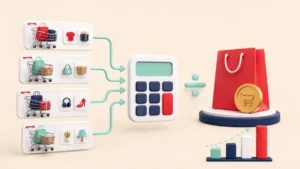
Average order value (AOV) tells you how much customers typically spend each time they place an order.
The average order value formula is:
AOV = Total Revenue ÷ Number of Orders
For example – if your store generates $10,000 from 200 orders, your AOV is $50.
Your Shopify AOV gives you a useful baseline for understanding purchasing behavior. If 1,000 orders generate $50,000, increasing AOV from $50 to $60 would generate $60,000 from the same number of orders. That is why knowing how to calculate average order value matters. You need a starting point before you can tell whether a new offer is helping.

Higher AOV creates extra revenue from customers you have already brought to your shop. It can also give you more room to cover acquisition costs, fulfillment costs, payment fees, discounts, and even returns. In fact, the idea is to make each purchase more valuable without making it useless for the buyer and the seller.
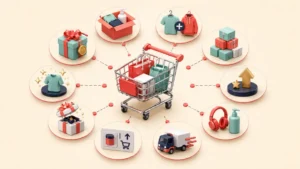
There is no one-size-fits-all solution for increasing average order value. The most effective method depends on your products and how your customers currently make purchases.
Bundle together products that naturally fit in together, such as skincare sets, coffee start-up kits, or travel bundles. Curated bundles help customers discover products they may not know about and would purchase separately.
Let customers create a bundle themselves. By creating a Shopify Mix and Match bundle, you can get more products per order while still giving customers the freedom to choose what’s in the bundle.
Create incentives for customers to buy more from you. For example: charge full price for 1 item, offer a 10% discount for 3 products, and a 15% discount for 5 products. This method increases the artist’s total sales, and discounting doesn’t have to be used for every sale.
Show customers the next level up: a bigger size, premium version, new model, or a product with added functionality. If there is a valid reason to upgrade, customers will happily spend more.
Suggest products that pair well with the product being purchased. A phone case with the phone and coffee filters with the coffee maker would help to avoid making Shopify cross-sell look too forced.
Set the minimum amount of goods required to qualify for free shipping. A customer with a $62 total will now see that they only need $13 in new purchases to reach the $75 threshold and qualify for free shipping.
Make recommendations for additional products while the customer reviews their cart. Checkout upselling options should be relevant and seamlessly related to the customer’s cart.
A post-purchase upsell is an offer to buy one more relevant item from the store after the customer completes payment. It works best when it matches what the customer has already purchased.
Use customer and product behavior to show more relevant recommendations. Personalized product recommendations can make additional products easier to discover and support ecommerce personalization.
Offering a free gift with a purchase of a certain amount can motivate customers to spend up to a specific threshold. Loyalty-based incentives can further motivate returning customers to spend more. Ultimately, the most efficient strategy depends upon the customer base and margins. An inventory that can be restocked may perform better with quantity breaks, while other inventory may respond better to bundling, cross-selling, and free shipping strategies.
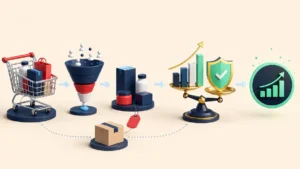
Increased Average Order Value makes sense only if higher sales don’t reduce your margin.
First, assess the change in AOV for the period when you implemented your new approach. Let’s say your AOV changed from $50 to $58. This means customers are now spending more per order than before. However, this figure will not show you how efficient your campaign is.
Assess the performance together with:
For example – A quantity discount can increase the AOV since people purchase more units of products. However, if the discount is high enough, then the increase in AOV will not make much sense for you.
This also applies to the free shipping threshold. If customers buy additional products to get this benefit, then compare the additional revenue with the shipping cost.
For example – a quantity discount may increase AOV because customers are buying more units. But if the discount is large enough to reduce your profit per order, the higher AOV may not be worth it.
The same applies to a free shipping threshold. If customers add another product to reach the threshold, compare the additional revenue with the shipping cost you absorb.
The useful question is not simply, “Did AOV increase?”
It is:
“Did AOV increase while the overall economics of the order remained healthy?”
That is why merchants should compare AOV, conversion rate, units per transaction, and margin together. A strategy that increases AOV while keeping those numbers in a healthy range has a stronger case for staying in your store.
Product bundling gives customers an incentive to add related products to the same order. The type of bundle you choose will also determine how customers spend more.
There are various techniques for bundling available on the BundleSuite app, and these include;
For instance, a skincare merchant may let customers create their own three-product routine. A food store may give customers the freedom to buy several products from one category. A merchant selling replenishable products may offer discounts for customers buying them in bulk. This is why product bundling can be an effective merchandising technique for Shopify stores, since the extra products have an obvious relationship with the initial purchase. What matters is analyzing what happens after you launch an offer.
Here are several metrics to compare:
If your customers buy more products while your margins stay strong, it suggests your package creates more value for you than it inflates AOV. Put differently, the right strategy for creating product packages is to find a purchasing pattern among your clients, create an offer for it, and figure out what to improve or remove. When customers add more products to the basket and your margins stay strong, the product bundle does more than add items; it creates additional value.
This is the right approach to developing product bundles:

Raising average order value doesn’t have to mean convincing customers to buy products they don’t need or giving bigger discounts. Rather, you should consider ways to give customers valid reasons to increase the value of their purchase.
BundleSuite is your Shopify-ready bundle builder app for high-converting bundles—BYOB, Mix & Match, Volume Discounts, Kits, Combos, you name it.
Built for merchants who want control, flexibility, and results. BundleSuite is your Shopify-ready bundle builder app for high-converting bundles—BYOB, Mix & Match, Volume Discounts, Kits, Combos, you name it. Built for merchants who want control, flexibility, and results.
BundleSuite is your Shopify-ready bundle builder app for high-converting bundles—BYOB, Mix & Match, Volume Discounts, Kits, Combos, you name it. Built for merchants who want control, flexibility, and results.
There is no particular average order value (AOV) that can be agreed upon. It changes depending on each store’s products, the prices of its offerings, and customer behavior. You must consider your historical AOV.
Bundling items, suggesting complementary items, offering upsells, setting free-shipping thresholds, offering quantity discounts, and rewarding loyal customers are some ways to boost AOV. The most effective option to improve AOV can depend on the consumer buying behavior.
No. AOV can increase while profits decrease if companies decide to offer massive discounts, free shipping, or high incentives to shoppers. It is important to analyze AOV alongside margin.
Bundles encourage customers to buy several products at once, even if they aren’t necessarily related or meant to be bought together.
Using BundleSuite lets users create their own unique bundles that can be further classified into various categories such as Build Your Own Bundles, Mix and Match, Frequently Bought Together, BOG,O and Tiered discounts.
Estimate your AOV, units sold per transaction, conversion rates, discounts, and profit margins before and after the move. This way, you will know whether the tactic increased your order value without decreasing profitability.
Your email address will not be published. Required fields are marked*