7 min read
Aug 24, 2026
Product bundles aren’t just about packing more products into one’s shopping cart. With the right bundle, you can make your products more discoverable, easier to choose, and more motivating to buy in bulk. The best product bundles tie products together through a common use case, habit, or customer preference. In this guide, we will discuss five DTC brands that use various product bundling techniques and explore how Shopify merchants can benefit from them.
Key Takeaways
It is justified to create a bundle if it helps the buyer make an easy purchasing decision. A bundle should serve a clear purpose, including shared use, purchase habits, functionality, and a complete solution. Once buyers understand the relationship between the items, the bundle can improve product discoverability.
Successful Shopify product bundling includes products that customers already have a reason to purchase together. Examples include skincare regimens, bedding kits, travel kits, or multiple units of a frequently used product.
Some consumers want a pre-determined recommendation, while others already know their preferences. An effective product bundling strategy can incorporate both scenarios by providing a framework while leaving enough flexibility to make the bundle unique.
Customers must know what they gain by purchasing the bundle: convenience, variety, lower cost, or a quicker buying decision. If the benefits cannot be explained clearly enough, the bundle design is flawed.

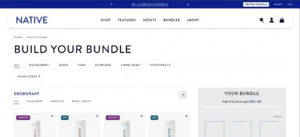
Native takes an open-ended strategy where shoppers can pick the products that go into their bundle. Native has a dedicated “Build Your Bundle” page that categorizes products by:
Lets shoppers add individual products to the bundle. What’s unique about Native is the combination of both structure and flexibility. The store gives shoppers a clear structure but still lets them choose products based on their preferences. This makes it an excellent example of e-commerce personalization, where the merchant draws the line but leaves it to the customer to decide what goes in between.
What to recreate: For stores selling complementary products in large numbers, set up a clear bundle structure, but give shoppers the freedom to choose products within it.
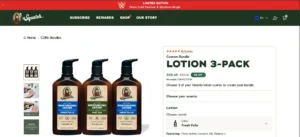
Dr. Squatch takes a different approach with its Lotion 3-Pack offer by simplifying it and making it easier for consumers to decide. In other words, the offer lets customers buy one product and bundles several items into a single purchase. This is an excellent illustration of bundle pricing since the offer does not require a complicated product mix in order to provide the incentive to purchase more.
What to recreate: Products that people replenish regularly. Consider items that consumers will probably restock. The multi-pack could build loyalty among repeat customers while increasing sales volume without making the shopping process more difficult.
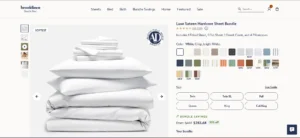
Brooklinen adopts a curated strategy through its Luxe Hardcore Sheet Bundle, combining more than one bedding item into a single offer rather than forcing buyers to buy items individually to create the bundle. This is where product recommendations become part of the shopping experience. The merchant has already decided on what goes together, and the buyer just has to decide which set to get.
What to replicate: Build from the desired outcome that the buyers have in mind. When multiple products are needed to create an arrangement, package them into a single offer so buyers can make the required purchase without too much decision-making.
These three examples show three product-bundling strategies:
Here are some additional examples that incorporate these ideas.
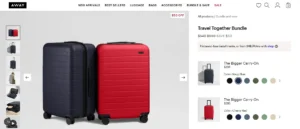
The Away Travel Together Bundle does the simple thing: It combines two of their Bigger Carry-On suitcases in a bundle meant for travel companions. Currently, the bundle sells for less than the combined price of the two suitcases, making it an obvious choice. The critical part of bundling, in this case, is how relevant the bundle is to the buyer’s need. Away isn’t just combining two identical products here. They align the bundle with the specific use case of traveling with someone else. It is a great example of bundling in related products. The bundle doesn’t necessarily need variety to be appealing; sometimes repeating the same product makes sense.
What to replicate: Find instances where customers buy multiple units of the same product. Couples, families, teams, gifts, or shared environments can create opportunities for this type of bundled offer.
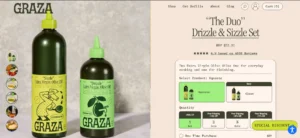
In its own way, Graza uses bundling to bring together two olive oils meant for different purposes. The company sells the Drizzle & Sizzle Set, which includes both a finishing oil and a cooking oil. The value in this bundle lies in the connection between the two products. Consumers don’t have to wonder why the products are bundled. One is for regular cooking, while the other is for finishing.
As a result, consumers receive a complete solution rather than just products put together into a bundle. It also provides a natural entry point for consumers interested in only one of the products.
What to replicate: Combine complementary products that fulfill different purposes. A good product bundling strategy helps consumers become familiar with more products, in addition to the reason to use them together.
These 5 examples show there isn’t a one-size-fits-all solution for a good product bundle. Sometimes a bundle needs to be flexible, sometimes quantity is key, and other times a use-case bundle is the right approach.
BundleSuite enables Shopify merchants to make different bundle types based on that customer’s needs. This bundle app supports the following bundle types: fixed bundles, mix-and-match or Build-a-Box-style bundles, quantity breaks, BOGO offers, gift offers, upsell offers, cross-sell offers, and frequently bought together bundles.
Examples include:
This is an important point, since the bundle type should reflect the customer behavior.
The most important lesson from these examples is that good bundles start with the customer, not the discount.
Every brand presents a reason to purchase a product combination to customers:
That is when product discoverability comes into play. Bundles create the opportunity to present products to customers who would not have discovered them on their own. The platform Shopify itself lists product discovery and curation among the advantages of selling bundles.
Every merchant’s task is to change the perspective through which the product catalog is viewed. The question should shift from, “What products could we put together?” to “What are the reasons to bundle products that customers have?”

There is no single recipe for creating an effective DTC bundle. Each such bundle works precisely because it provides a specific incentive for consumers to buy a bundle of goods rather than individual items – whether through more options, more convenience, a complete solution, or complementary goods.
If you want to apply these ideas to your Shopify store, BundleSuite lets you create bundles based on any of them.
BundleSuite is your Shopify-ready bundle builder app for high-converting bundles—BYOB, Mix & Match, Volume Discounts, Kits, Combos, you name it.
Built for merchants who want control, flexibility, and results. BundleSuite is your Shopify-ready bundle builder app for high-converting bundles—BYOB, Mix & Match, Volume Discounts, Kits, Combos, you name it. Built for merchants who want control, flexibility, and results.
BundleSuite is your Shopify-ready bundle builder app for high-converting bundles—BYOB, Mix & Match, Volume Discounts, Kits, Combos, you name it. Built for merchants who want control, flexibility, and results.
For a bundle to be considered good, it needs to connect the products in a clear way to a particular consumer need or purchasing habit.
Some common types include fixed bundles, multipack bundles, mix-and-match bundles, Build-a-Box, quantity-based bundles, and cross-sell bundles.
Yes, they can, because they encourage customers to buy more than one product at once.
Yes, Shopify sellers can use third-party bundle apps to create mix-and-match bundles, including BundleSuite.
Bundling could help customers find out about other products through a single shopping experience.
Yes, BundleSuite is able to create fixed bundles, mix-and-match, Build-a-Box, quantity breaks, BOGO, freebies, upsell, cross-sell, and often purchased together offers.
Your email address will not be published. Required fields are marked*