
4 min read
Oct 24, 2026
A bundle that seems to be a success might in fact be unprofitable, while one that is not active could still be effective.
It is important to keep an eye on the correct metrics. Relying only on revenue can be deceptive since it does not show whether the bundle boosts margin, order value, or conversion, or merely shifts existing sales.
Key Takeaways

Product bundling without any measurements is simply a hypothesis that continues without end; a product bundling strategy that is not compared with actual figures can go on for months without making a profit or without outperforming the individual products it was based on.
We need to set up a performance baseline for each Shopify product bundle, for each product bundle and for every variant of product bundle that a store runs, since a single storewide conversion rate doesn’t show which specific Shopify product bundles are actually earning a place on the page and which are only taking up space.

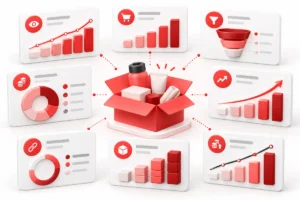
Bundle pricing strategy should be evaluated against increase average order value results specifically, not just overall revenue, and the same discipline applies when trying to increase AOV or improve shopify AOV more broadly.
Bundle discounts need to be weighed against shopify revenue and shopify profit together, since a bundle can grow revenue while quietly shrinking shopify profit margin.
Tracking shopify performance at the bundle level, alongside units per transaction and net profit margin, is what separates a bundle program that’s genuinely working from one that just looks busy.
Comparing this against shopify average order value for non-bundle purchases gives the clearest read on whether a specific product bundle or set of shopify product bundles is earning its place, and whether product bundling as a whole is paying off.


Pulling these numbers manually from Shopify’s default analytics means stitching together data that isn’t organized by bundle in the first place. A dedicated shopify bundle app solves this by tracking performance at the bundle level natively.
BundleSuite functions as both a bundle builder and a shopify bundle builder with performance tracking built in, so stores running multiple shopify product bundles can see which ones are actually working without exporting data into a spreadsheet every time.

BundleSuite is your Shopify-ready bundle builder app for high-converting bundles—BYOB, Mix & Match, Volume Discounts, Kits, Combos, you name it.
Built for merchants who want control, flexibility, and results. BundleSuite is your Shopify-ready bundle builder app for high-converting bundles—BYOB, Mix & Match, Volume Discounts, Kits, Combos, you name it. Built for merchants who want control, flexibility, and results.
BundleSuite is your Shopify-ready bundle builder app for high-converting bundles—BYOB, Mix & Match, Volume Discounts, Kits, Combos, you name it. Built for merchants who want control, flexibility, and results.
The average order value uplift is generally the most clear-cut indicator, since it directly shows whether the bundle is meeting its primary objective.
You should keep checking, not merely at the time of launch, because changes to the inventory, seasonality, and customers’ changing behaviour can all affect how a bundle performs over time.
That is the reason why the profit margin has to be kept separate from revenue, since discounts which increase sales can still result in a decrease in overall profitability.
It illustrates how frequently the bundle is added when made as part of another purchase compared with the number of times it is bought by itself, thereby allowing incremental sales to be differentiated from cannibalized ones.
Since Shopify’s default analytics do not break down performance by bundle, the majority of stores need to use a specific bundle app in order to track these metrics without having to do the work in spreadsheets.
Your email address will not be published. Required fields are marked*