
7 min read
Sep 25, 2026
Carrying out A/B testing on product bundles involves putting two different versions of the same bundle offer in front of real users and letting the data decide which one wins, rather than simply guessing which layout, price, or combination is more effective at converting. When A/B testing is applied to bundles in an e-commerce context, it gets rid of the guesswork from decisions that have a direct impact on revenue per order, and it is the quickest method of discovering what actually influences the figures of a Shopify store rather than what appears attractive in a mockup.
Key Takeaways

A/B testing of ecommerce offers involves dividing the traffic between two different versions of a page or offer and then seeing which one leads to a greater amount of the desired result, typically purchases or revenue per visitor. When this approach is applied to bundles, it means that half of your visitors see one bundle configuration while the other half see a different one, after which the add-to-cart rate, the conversion rate, and the average order value are compared between the two groups.
A bundling strategy that has never been tried is merely a guess presented as a plan. It’s possible for two bundles to appear just as sensible on paper. One might offer a flat discount on three items, the other might give a discount that varies according to the quantity. There there is no reliable method of knowing which one a particular store’s customers will respond to unless both options are tested with actual traffic.
This is also why Shopify conversion optimisation work is worthwhile: a bundle that performs well in testing doesn’t just result in more units being sold, it also improves the conversion rate of the entire product page it’s on, which is a more sustainable way of boosting ecommerce sales than relying on one-off discount promotions.

Before carrying out a test you should establish the single metric which determines the winner, most commonly revenue per visitor rather than the raw conversion rate, since a bundle might convert more frequently at a lower price level and yet still earn less money as a whole. It is because revenue per visitor takes into account both the frequency with which people make purchases and the amount they spend, it provides a more truthful record for bundle experiments.
It is necessary to alter just one factor at a time. If you carry out testing of a new bundle arrangement alongside a new price then you won’t be able to tell which of the changes has caused the result. Testing prices on Shopify should be carried out separately from testing layouts or combinations. Even though it may be tempting to include all the ideas in a single experiment in order to save time.
The baseline you are aiming to exceed can be obtained from the average order value and the Shopify average order value figures of your current bundles, so get those figures before the experiment begins, not after.
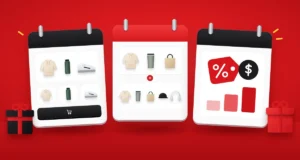
1. The way a bundle is shown on the page – For example, as one combined product card, as a build-your-own option selector, or as a checklist of add-ons, has an effect on how easily customers can understand what they are purchasing. Since layout tests involve no change to the underlying offer but only to the way it is presented, they usually yield the quickest and most clear-cut results.
2. The different bundle sizes and product combinations – Bundles consisting of three items and five items drawn from the same catalogue can vary greatly depending on customers’ price sensitivity and the value they perceive. At this stage of designing product bundles, the aim is to find out which combinations the customers actually want to buy together, not which combination is the easiest to ship.
3. Fixed pricing, discounts given as a percentage and tiered offers – Product bundle pricing is generally the most effective element to test. Whether it’s a flat dollar discount, a certain percentage off, or a tiered system that encourages buying in larger quantities, each one creates different psychological incentives. When carrying out tests on bundle pricing strategies, the various formats should be compared directly rather than merely testing different discount levels within the same format. Shopify bundle discounts that are too generous may help to protect the conversion rate even as they quietly eat into the margin, which means that pricing tests must monitor profit per order, not just the number of bundle discounts redeemed. A Shopify bundle discount that performs well in terms of conversion but fails on margin is not truly a success.
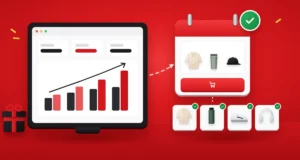
Shopify’s conversion optimisation based on bundle testing will only be successful if you decide to act on the results. When a test has reached statistical significance, you should launch the winning version across the entire store rather than keeping both versions live as a precaution. Before accepting any claims regarding an increase in average order value from a test, they must be verified using actual order data over a period of at least a few weeks, since the early results can change once the novelty of the new offer fades.
You should also monitor the downstream effects. A bundle change which boosts Shopify sales in terms of raw revenue but at the same time reduces the e-commerce profit margin should be subjected to further examination before it is deemed a success. When you’ve established the current winner, carry out the next round of Shopify A/B testing on a different variable since bundle performance continues to compound as more variables are optimised.

It is so time-consuming to create and switch between bundle variants using Shopify’s theme editor that most stores end up only carrying out one test. By allowing you to build various bundle variants, layouts, combinations, and pricing structures without having to write any code, product bundling solutions such as BundleSuite eliminate this inconvenience and turn testing into a process that can be repeated rather than something that has to be done just once. A product bundling approach like this can be expanded beyond the initial experiment: after a particular layout or pricing method has proven successful, it can be applied to the rest of the catalog in just a few minutes, rather than requiring a further development cycle.
BundleSuite is your Shopify-ready bundle builder app for high-converting bundles—BYOB, Mix & Match, Volume Discounts, Kits, Combos, you name it.
Built for merchants who want control, flexibility, and results. BundleSuite is your Shopify-ready bundle builder app for high-converting bundles—BYOB, Mix & Match, Volume Discounts, Kits, Combos, you name it. Built for merchants who want control, flexibility, and results.
BundleSuite is your Shopify-ready bundle builder app for high-converting bundles—BYOB, Mix & Match, Volume Discounts, Kits, Combos, you name it. Built for merchants who want control, flexibility, and results.
Most tests that are bundled together take at least two to four weeks to gather a sufficient number of orders to obtain a reliable result, although those carried out in stores with less traffic may take longer to reach statistical significance.
Revenue per visitor is usually the most dependable figure since it takes into account both the conversion rate and the order value rather than focusing on one at the cost of the other.
If both changes are tested at the same time, you can’t tell which one caused the result, so it is better to look at one variable at a time even if this means that it takes longer to carry out the full series of experiments.
Small stores can still carry out tests, but in order to obtain a reliable sample size they will need longer test periods and should focus on testing the most frequently visited bundles first.
Calling a test early based on a short-term spike, before the sample size or test duration is large enough to rule out normal day-to-day variation.
Your email address will not be published. Required fields are marked*