7 min read
Jul 20, 2026
A product bundle is just two or more items sold together. Nothing new there. What makes one SEO-optimized is different: it’s built to actually rank, not just convert once someone’s already on the page. Most stores treat product bundling as a checkout trick. Bump the order value, done. That’s leaving half the value on the table.
An SEO-optimized bundle gets its own landing page, its own title tag, its own reason to show up in a Google search for something like “birthday gift set for him.” Done right, it becomes a real piece of ecommerce seo strategy, not a hidden widget three clicks deep in a product page. For a store running on Shopify, this usually comes down to how well Shopify SEO practices get applied to bundle pages specifically, since the default theme templates rarely handle them well out of the box. Most themes treat a bundle as a variant of an existing product, which means it inherits that product’s URL, title, and metadata instead of getting anything of its own to rank with.
A solid product bundling strategy treats each bundle almost like its own micro-product. Shopify bundles built this way don’t just sit quietly waiting for internal traffic. They pull in organic visitors who never would’ve found the individual items on their own, which is really the whole point of a proper Shopify SEO strategy applied at the bundle level instead of just the homepage.
Key Takeaways

Most merchants fail to notice this fact. Bundle pages are easier to rank than single product pages. This means less competition and a more focused search intent. For example, when someone searches for “skincare starter set,” they are more likely to purchase than someone searching for “moisturizer,” and there are fewer pages competing for the former phrase.
Work to improve ecommerce SEO at the bundle level and the payoff compounds. Each bundle becomes its own small entry point into the store, one that didn’t exist before and doesn’t rely on paid traffic to work. Shopify SEO applied here isn’t about chasing a handful of competitive head terms. It’s about building dozens of smaller pages that each rank for something specific.
This also feeds back into product discovery in a way search alone can’t. Ecommerce product discovery usually depends on someone already knowing roughly what they want. A well-built bundle page can pull in a shopper through product discovery optimization before she’s even landed on the store, showing up in search for a need she hadn’t fully articulated yet, “gifts for a new homeowner” rather than a specific SKU. That’s a genuinely different channel, and it’s one of the more overlooked ecommerce growth strategies available to a mid-sized store. Most merchants pour their SEO budget into blog content or category pages and never think to treat a bundle as a page worth optimizing at all.


More pages, each targeting a slightly different phrase, means more chances to show up in search at all. A store with fifty bundles has fifty extra shots at ranking that a store without them simply doesn’t, and those pages compete on far less crowded terms than the main product listings do.
Head terms are brutal to rank for. Long-tail phrases, the kind bundles naturally attract, “eco-friendly baby shower gift bundle” and similar, have far less competition and convert better once someone lands, since the searcher already knows roughly what she wants.
Bundles pages offer product combinations that never would have crossed the shopper’s mind to search for when entering a search. There is product discovery through search rather than site merchandising.
Every bundle page that ranks is a sale that didn’t need an ad dollar behind it. Stack up enough of them and organic revenue starts showing a real, separate line from the rest of paid acquisition.
Around certain holidays, there are high search volumes for products and common product pages are poor at capitalizing on it. By developing a page around gift sets with appropriate titles and positioning for the specific holiday opportunity, you can capitalize on the search that wouldn’t be captured by a standard product page.
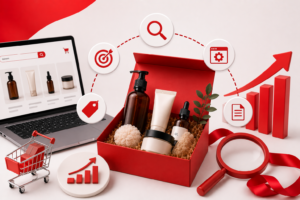
Seven things separate a bundle page that ranks from one that just sits there.
Without being a pop-up or an element hidden in the product page, it has its own website, content, and treated as a genuine destination rather than a complementary component in so different matters.
Generic titles like “Bundle 1” tell search engines nothing. A title should describe what the bundle actually is and who it’s for, the same way a good product title would.
The line someone reads before clicking. It needs to say what’s in the bundle and why it’s worth the click, not just repeat the title word for word.
A real paragraph explaining what’s included and why the pairing makes sense. Thin content, just a price and an “add to cart” button, rarely ranks for anything, since there’s nothing for a search engine to actually index and match against a query.
Bundle pages need links pointing in from category pages and related products, not just outbound links to the individual items. Isolated pages don’t get crawled or ranked well, no matter how good the content sitting on them is.
A URL like /bundles/winter-skincare-set beats a string of random characters every time, both for users trying to remember it and for search engines trying to understand what the page is about.
Structured data lets Google know precisely what is included in your package, including product price, its availability, and sometimes even ratings. If you do not use such an option, you miss out on the opportunity of obtaining rich snippets that help your offer to stand out in the search results.

Building all seven elements manually for every bundle gets old fast, especially across a catalog with dozens of potential combinations. BundleSuite handles the heavy lifting: dedicated pages, schema markup, and clean URLs generated automatically the moment a bundle gets created, no developer required. Update the products inside a bundle and the page updates with it, instead of leaving stale content sitting around for months.
It’s one of the few product bundling service providers built specifically around search visibility rather than just checkout upsells. As a Shopify bundle app, it treats every bundle as a page worth ranking, not just a widget worth clicking. For merchants comparing product bundling Shopify options, the real differentiator is whether the tool actually builds for organic traffic or just handles the cross-sell mechanics. BundleSuite does both, which is rare among product bundling services still focused only on the cart, and it means the SEO work keeps compounding long after the bundle itself was set up.
BundleSuite is your Shopify-ready bundle builder app for high-converting bundles—BYOB, Mix & Match, Volume Discounts, Kits, Combos, you name it.
Built for merchants who want control, flexibility, and results. BundleSuite is your Shopify-ready bundle builder app for high-converting bundles—BYOB, Mix & Match, Volume Discounts, Kits, Combos, you name it. Built for merchants who want control, flexibility, and results.
BundleSuite is your Shopify-ready bundle builder app for high-converting bundles—BYOB, Mix & Match, Volume Discounts, Kits, Combos, you name it. Built for merchants who want control, flexibility, and results.
Often, yes, especially for long-tail and seasonal searches where there’s less competition and clearer intent.
Two to four usually works best. More than that and the page starts feeling cluttered, and the content gets harder to write well.
It matters more than most merchants think. Structured data can be the difference between a plain blue link and a rich result with pricing and availability shown directly in search.
Not if the URL and page stay live year-round with updated content, rather than getting deleted and rebuilt every year from scratch.
Yes. A smaller catalog actually has less competition for its own bundle phrases, so the ranking opportunity is often bigger relative to the size of the store.
Your email address will not be published. Required fields are marked*