10 min read
Jun 09, 2026
Not every product belongs in a bundle. That sounds obvious until you watch a brand try to bundle a hero product with something technically related but practically useless to the same customer — and wonder why attach rates are flat.
Product bundles with a good fit will have certain characteristics related to the category they represent. Some characteristics of a well-fitting category include complementary use cases within the category, natural replenishment cycles within the category, and a solid gifting context within the category. If you take any one of those three characteristics away from the product, it simply becomes a box of multiple products.
This piece breaks down what actually makes a product category suitable for bundling of products, why certain categories consistently outperform others in bundle formats, and which six category types have the strongest track record — from skincare kits and beauty bundles to supplement bundles, gadget bundles, gift hampers, and kitchen accessories. At the end, a note on how product bundling solutions can help you execute once the category logic is clear.
6 things worth knowing before you keep reading:
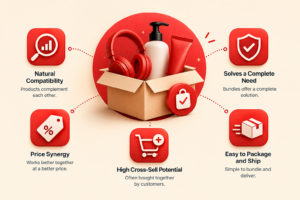
The question isn’t whether a category can be bundled. Almost anything can be put in a box together. The question is whether bundling creates genuine value for the customer or just convenience for the brand’s inventory team.
Three qualities consistently separate high-performing bundle categories from low-performing ones:
Product recommendations that emerge from real purchase data tend to land in these same categories. When you look at what customers actually buy together, complementarity and repurchase show up consistently. The category lists below aren’t arbitrary — they reflect patterns in related products data across thousands of ecommerce stores.
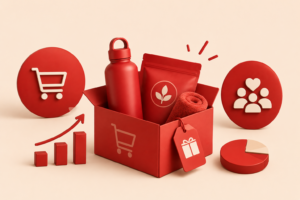
Beyond the three qualities above, there’s a structural reason some categories outperform others in bundle formats: price tolerance. Categories where customers already expect to spend across multiple products — skincare routines, kitchen setups, supplement stacks — have buyers who are mentally prepared to spend more in a single transaction. A product bundling strategy in these categories doesn’t have to convince anyone that spending is appropriate. It just has to make the spend feel well-directed.
Categories with low average order values and low natural complementarity — say, single-use stationery items or commodity hardware — face a harder bundling challenge. The math can still work, but the customer psychology requires more effort to get right.
The six categories below have the most favorable conditions for product bundling across complementarity, repurchase, gift suitability, and price tolerance.
Skincare kits and beauty bundles are the most natural bundle format in ecommerce. The reason is routine. Skincare, in particular, is a sequential use category — cleanser before toner, toner before serum, serum before moisturiser. That sequence is a bundle waiting to happen. Customers who buy into a skincare routine want the whole system to work together, and a skincare kit signals that the brand has already thought about that compatibility.
Beauty bundles are also ideal for gifting purposes. A carefully selected assortment (three or four products) within the same category the recipient is interested in makes it easier for the giver to decide on a gift than does a single product, since the bundle conveys thoughtfulness as well as careful selection rather than simply indicating the amount spent.
The product bundling strategy that works best here is building around skin type or concern — oily skin, sensitive skin, anti-aging — rather than just product type. That specificity makes the bundle feel like a recommendation, not a promotion.
Outfit bundles and fashion accessories bundles work when they’re built around a complete look rather than a category. Bundling a shirt with trousers and a belt isn’t just cross-selling — it’s removing the styling decision from the customer entirely. For brands with a strong aesthetic point of view, that’s a brand expression as much as a commercial strategy.
Clothing bundles perform particularly well in the basics and essentials segment — five-pack socks, three-pack tees, two-pack loungewear sets. Here the bundle isn’t about style curation; it’s about value and convenience. These two bundle types serve very different customer motivations and shouldn’t be conflated in the product bundling strategy.
Fashion accessories bundles — a bag, a wallet, a card holder — follow the complementarity rule cleanly. The products are used in the same context, often visible together, and the customer who buys one is already a likely buyer for the others.
Tech accessories and gadget bundles follow a slightly different logic. The complementarity here is functional rather than aesthetic. A laptop stand, a wireless keyboard, and a USB hub aren’t stylistically matched — they’re operationally matched. They solve the same setup problem.
The most successful bundles of gadgets are those that are based on specific use cases, such as the home office setup, the travel tech kit, or the photographer’s essentials—otherwise, a bunch of tech accessories becomes a “liquidation sale” instead of a genuine recommendation.
The challenge with this category is that related products are sometimes too obvious. Customers already know a phone case goes with a phone. The bundles that perform best in electronics go one step further — pairing the expected with the unexpected but useful. The screen protector is expected. The lens cleaning kit isn’t — but it should be.
Healthy snack box formats and gift hampers are two of the most reliable bundle structures in food and beverage. They work for different reasons.
Healthy snack box bundles succeed because they combine discovery with convenience. A customer who’s interested in eating better doesn’t necessarily know which products to try — a curated box removes that uncertainty and turns it into an experience. The discovery mechanic is the product. This is also one of the categories where ecommerce personalization pays off most directly: a snack box tailored to dietary preferences converts at a notably higher rate than a generic one.
Gift hampers in food and beverage work because food is universally gifted and the visual presentation of a curated hamper does significant work on perceived value. A collection of artisan products in a well-designed box reads as a thoughtful gift at a price point that would feel expensive if you were buying just one of the items.
Supplement bundles and wellness kits are among the highest-retention bundle formats in ecommerce. The category has strong repurchase behavior, strong complementarity — sleep and stress, energy and recovery, gut health and immunity — and a customer base that’s already primed to think in systems rather than individual products.
Kits for wellness work best when they center on a goal or protocol (for example, “the recovery kit” or “your morning stack,” as opposed to simply “three supplements”). This allows the customer to feel like they are creating something rather than just purchasing items, which activates the desire to complete a project.
Supplement bundles also benefit from subscription formats more than almost any other category. A monthly wellness bundle that replenishes automatically reduces decision fatigue on the repurchase and builds the kind of habit-based retention that most product bundling strategies are trying to create.
Kitchen accessories and home essentials bundles follow the same use-case logic as tech. A kitchen starter kit — cutting board, chef’s knife, kitchen shears, peeler — solves a specific setup problem for a specific customer moment (moving into a new place, upgrading from cheap equipment). Home essentials bundles for new homeowners or renters work on the same principle: the customer has a defined need, the bundle addresses it completely.
Kitchen accessories bundles also perform well in the gifting context for the same reason food hampers do — they feel considered and practical simultaneously. A well-chosen set of kitchen tools reads as a gift that respects the recipient’s time and taste.
The product bundling strategy in this category should lead with the use case, not the product list. “The kitchen starter kit” as a frame is more compelling than “5 kitchen accessories” as a description — even if the contents are identical.
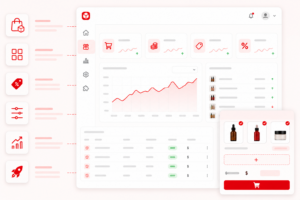
The category logic above tells you what to bundle. Execution is a separate problem. Manually managing bundle inventory, pricing, and discount logic on Shopify gets complicated fast — especially across multiple bundle types and seasonal variations.
BundleSuite is built specifically for Shopify product bundling solutions: fixed bundles, mix-and-match sets, ecommerce personalization through bundle recommendations, and subscription-compatible bundle structures. It handles the operational layer — inventory syncing, bundle-specific discounts, bundle product pages — so the strategic layer, the part this piece has been about, stays the focus.
It’s one of the more capable Shopify apps in the bundling category, and it’s worth exploring once you’ve figured out which categories and combinations are worth building around.
Product bundling isn’t a category-agnostic strategy. The brands that get the most out of it — higher AOV, stronger retention, more repeat customers — are the ones operating in categories with natural complementarity, repurchase behavior, or gift suitability.
Skincare kits, beauty bundles, supplement bundles, wellness kits, gadget bundles, gift hampers, healthy snack box formats, clothing bundles, kitchen accessories — these categories don’t perform well in bundles by accident. They perform well because the underlying customer behavior already supports the logic.
A strong product bundling strategy in the right category is one of the cleaner paths to sustainable ecommerce personalization and repeat purchase growth. Build the category case first. The bundle almost writes itself after that.
What I love about SimpleBundle is the SEO impact. Each bundle has its own product page, which helps with marketing and driving organic traffic! This has opened up new opportunities for me to promote specific bundles and get them ranked on Google. The app is fast, flexible, and customer support is top-notch. My bundle sales have increased dramatically since I installed it.
Your email address will not be published. Required fields are marked*